In an increasingly competitive and globally interconnected industrial environment, IT infrastructure is no longer a support function - it has become a structural pillar of operational continuity, cybersecurity, and scalable growth.
Over the past months, FAIST Control Systems Business Unit has launched a structured modernization program aimed at reinforcing its IT architecture to support business development, enhance process reliability, and ensure long-term technological sustainability. Within FAIST, IT is progressively evolving from operational support to strategic enabler, reinforcing governance, data integrity, and industrial resilience across international operations.
Digital transformation in a global manufacturing environment
For an international manufacturing organization such as FAIST, digital transformation is not simply a matter of updating software platforms. It involves ensuring end-to-end process integration, secure and controlled data flows, real-time operational visibility, and business continuity across multiple geographies.
Information systems today must support distributed teams, several production sites, and increasingly complex regulatory environments, while guaranteeing high levels of system availability and data protection. In this context, strengthening infrastructure redundancy and enhancing disaster recovery capabilities have become central priorities. Particular attention is being dedicated to cybersecurity, with continuous alignment to evolving international standards and best practices, in order to protect industrial data and reduce exposure to operational risks.
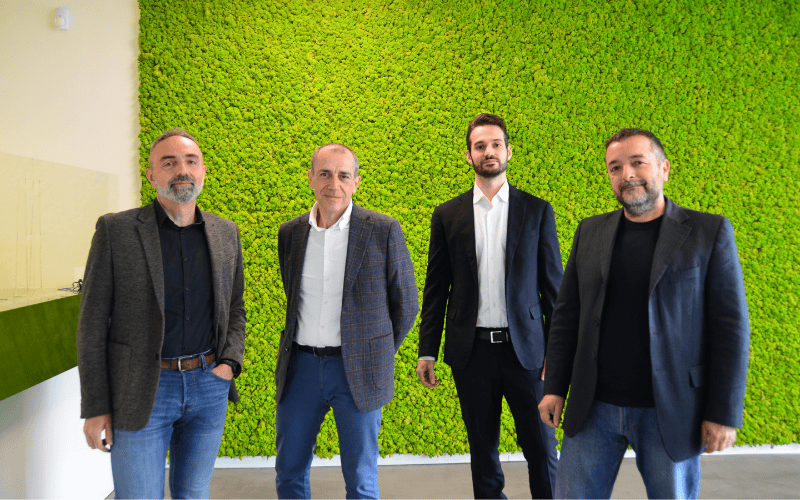
As Stefano Rizzi, FAIST Group IT Manager, explains:
“IT innovation is not an end in itself, but a fundamental tool to ensure continuity, reliability and long-term scalability. Robust infrastructure and secure platforms are prerequisites for sustainable industrial growth.”
ERP governance and technological independence
A key pillar of the modernization roadmap is the upgrade of JDE EnterpriseOne to the latest release. This step ensures greater system stability, improved security alignment, and technological continuity for the platform that supports FAIST’s core processes.
At the same time, the ERP rollout to FAIST Enhanced Controls in China has further advanced the harmonization of management systems across the Business Unit. Bringing all entities onto a unified platform strengthens integration between processes, improves data consistency, and enhances transparency across functions.
The decision to maintain an on-premise ERP model reflects a deliberate governance strategy. While SaaS-based solutions are increasingly widespread, retaining direct control over the ERP infrastructure allows FAIST to preserve flexibility, avoid long-term vendor lock-in, and ensure greater predictability in cost management. It also reinforces control over data sovereignty and enables the platform to evolve in alignment with specific industrial requirements rather than external development roadmaps.
Financial process automation and control
The IT transformation program also extends to treasury and financial operations. The introduction of automation tools and enhanced banking integration aims to reduce manual activities, strengthen auditability, and improve visibility over financial flows. This evolution contributes to a more structured internal control framework, increasing reliability and transparency in financial management while supporting faster and more accurate decision-making.
Data, intelligence and performance visibility
Another strategic area of development concerns the enhancement of FAIST’s data assets. The introduction of next-generation Business Intelligence solutions, supported by advanced analytics and artificial intelligence capabilities, will enable more structured access to operational and financial data.
The objective is not simply to collect information, but to transform it into actionable insights. Improved data governance, clearer performance monitoring, and faster identification of optimization opportunities will strengthen both strategic and operational decision-making. The long-term ambition is to consolidate a data-driven culture across the Business Unit, where information becomes a shared and reliable foundation for growth.
Security, resilience and alignment between IT and business
In an increasingly digital industrial landscape, cybersecurity and resilience cannot be treated as isolated technical matters. They represent essential conditions for maintaining operational stability and protecting corporate know-how.
The initiatives underway therefore focus not only on infrastructure hardening and system protection, but also on raising organizational awareness and fostering closer collaboration between IT and business functions. Greater system integration, improved access to structured data, and reinforced cybersecurity measures are creating the conditions for a more responsive and future-ready organization.
In this scenario, IT becomes a strategic capability that enables scalability, safeguards continuity, and strengthens governance across the Business Unit. Investing in technology is therefore not merely about upgrading systems. It is about reinforcing the structural foundations that support operational reliability, regulatory compliance, and long-term industrial competitiveness.