The decarbonisation of industry is no longer just a sustainability goal, but rather a regulatory pillar that is reshaping the boundaries of global trade.
At the start of 2026, the European Union drew a clear line: the price of industrial progress must reflect its environmental impact, regardless of where the goods are produced, and from 1 January 2026, the Carbon Border Adjustment Mechanism (CBAM) initiative has officially entered its definitive phase.
No longer in its monitoring phase, CBAM is now a fully operational system designed to ensure that the European Union's efforts to reduce emissions are not undermined by imports of products from countries with less rigorous climate standards.
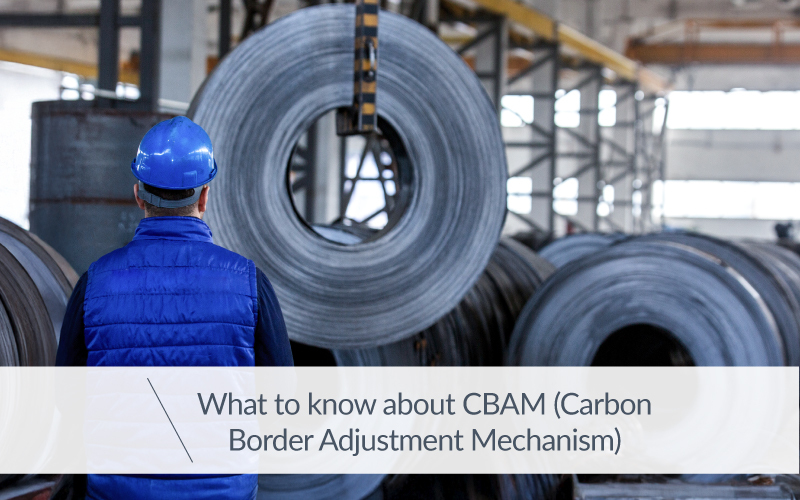
The regulation aims to equalise the cost of carbon emissions between European and imported products, involving energy-intensive sectors such as cement, fertilisers, electricity, hydrogen, and metals supply chain - specifically pig iron, iron, steel, and aluminium.
Industrial processing and the traceability of raw materials
The new rules do not exclusively affect finished products but extend to materials imported via so-called "inward processing" regimes.
This concept, fundamental for manufacturing industries, refers to the importation of non-EU raw materials or components intended to be processed or repaired within European factories before being placed back on the market.
Even in this scenario, CBAM requires precise reporting: the carbon footprint of the original raw material must be tracked and declared, as the mechanism follows the environmental value of the material throughout the entire industrial transformation process.
“Economic nationality" and access to the EU market
In the customs sphere, CBAM compliance is based on the concept of "non-preferential origin", which identifies a good's true economic nationality.
This data is not limited to indicating the shipping location; instead, it certifies where the product was actually manufactured or where it underwent its last substantial transformation.
If this origin lies in a non-EU country, the importer must act as an "authorised CBAM declarant" or utilise a qualified customs representative.
In this context, holding AEO (Authorised Economic Operator) certification represents a strategic advantage: certified companies benefit from a simplified and priority authorisation process, significantly reducing bureaucratic burdens and waiting times for obtaining CBAM licences.
Exemption thresholds and volume monitoring
To balance regulatory rigour with the operational flexibility of businesses, the legislator has introduced a "de minimis" exemption threshold based on the net mass of the goods.
For the 2026 calendar year, CBAM obligations do not apply if the total annual imports per individual operator do not exceed 50 tonnes, with the exception of electricity and hydrogen, which always remain subject to reporting.
However, rigorous monitoring of flows is essential: exceeding this limit, even by a small margin, triggers the retroactive application of all compliance requirements for the entire volume of goods imported during the year. Furthermore, specific derogations exist for goods intended for military activities or originating from nations with carbon pricing systems equivalent to the European one, such as Switzerland and Norway.
Procedural deadlines and customs compliance
The Customs Agency has provided a tolerance window to support businesses during this transition. Until 31 March 2026, it is permitted to import CBAM goods provided that the company has already submitted its application in the dedicated digital registry. This derogation will remain valid until the authorities reach a final decision and, in any case, no later than 27 September 2026.
During this phase, the correct completion of customs declarations using specific codes - such as Y128 for already authorised entities or Y238 for those with a pending application - is the only way to ensure supply chain continuity and avoid hold-ups at the border.
Beyond bureaucracy: a strategic vision
The full operational status of CBAM necessitates constant vigilance against all forms of circumvention, such as the artificial splitting of shipments to bypass the established mass thresholds.
Customs authorities now have the mandate to block non-compliant imports and report violations for the application of financial penalties.
For modern industrial entities, adapting to these standards should not be viewed merely as a customs burden, but as an opportunity to certify their transparency and environmental integrity.
Regulatory compliance thus becomes the universal language through which leading companies demonstrate their readiness for the challenges of a net-zero global economy.